Costa Rica 200 Pushes Athletes to the Edge in a Week of Relentless Endurance
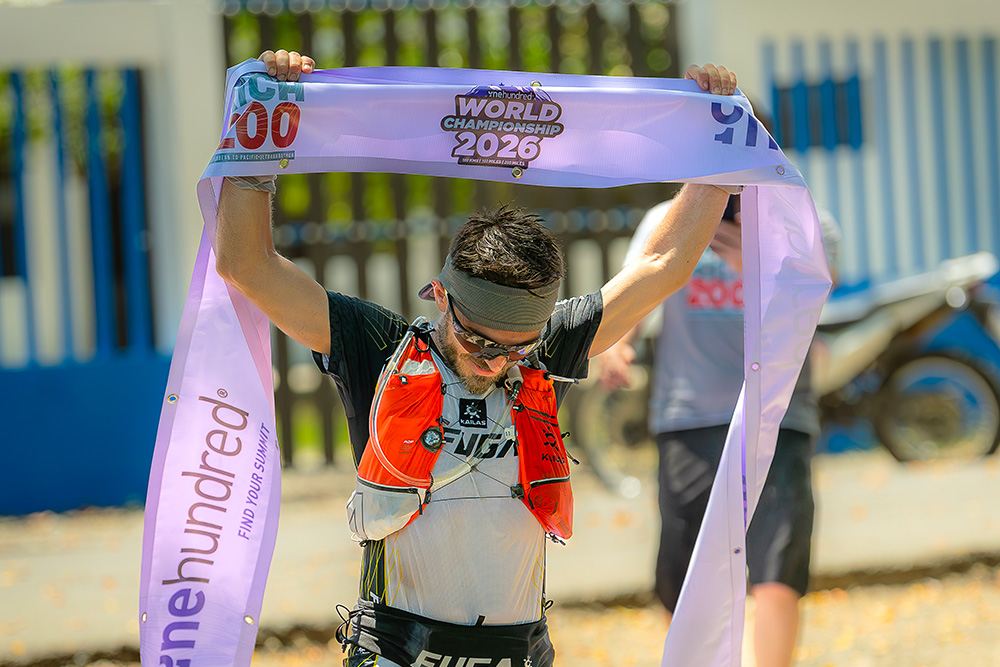
The latest edition of the Costa Rica 200 once again proved that this race is about far more than finishing times. Crossing the country from the Caribbean coast to the Pacific Ocean, Costa Rica 200 asked athletes to endure multiple challenges from terrain and climate building into physical and mental fatigue that strips everything back to character.
The route was brutal from the beginning. Runners started their day at the Cariari National Wetlands for a 7-kilometre beach prologue, opening the race in crushing humidity before the official start later that morning in Goshen. It was only the beginning of a course that would climb through jungle mountains and descend, days later, to the Pacific.
At the front of the 200-mile race, Martin Perrier delivered a performance that redefined what was possible on the course. Through rain-soaked trails, bursts of tropical heat, and the notorious “Monster Segment” on the Ruta Sukia, he held the lead from early on and never let it go.
His race, however, was not without complication. Perrier failed to carry a backup battery to recharge his GPS devices, leaving him without navigation through part of the most technical section of the course. In that moment, feeling exposed and uncertain, he activated his emergency tracker before regaining composure, cancelling the alert, and continuing on course. Under race regulations, these actions resulted in a combined five-hour penalty.
Even with that time added, his official result of 83:05:03 stood nearly eight hours faster than last year’s winning mark, an extraordinary performance shaped not only by speed, but by the ability to recover from error and keep moving forward.
If Perrier led the race, Sandra Mejía embodied control and consistency. Returning for her second year, Mejía once again mastered one of the toughest courses in the region. Across rain, heat, cold, mountains, and coastline, she defended her title to finish as first woman and second overall with a faster time than last year.
Among the most respected performances came from Oliviero Alotto, who started the race already managing pain in one leg. Moving without his usual ease, he endured every stage of the course and claimed second place in the men’s category, a result built entirely on resilience.
Not every story ended at the finish line. Fran Santin pushed beyond 300 kilometres before worsening foot conditions forced her withdrawal. Along the way, she also lost the course briefly and had to retrace her route using her GPS tracker, another reminder of how unforgiving the terrain can be.
The event’s 100K category added another standout performance, with Michele Graglia taking control early and never relinquishing it, recording a decisive comeback to racing after hiatus. He secured victory ahead of Fernando Brenes, Adrian Lopez and Javier Echecopar.
Eventually, every finisher faced the same closing test: a rocky, relentless descent, then straight into the final hot and humid 19 kilometres to the Pacific coast. By then, the race had already asked everything.
The final finish-line moment captured the spirit of Costa Rica 200. The last finishers in the 200M and 100K races respectively, Declan Murray and Javier Echecopar crossed together.
Costa Rica 200 remains one of the sport’s purest endurance challenges, not just for its distance, but for what it demands of the people who take it on. Decisions matter. Mistakes carry consequences. And the ability to recover, adapt, and continue often defines the outcome.
As part of the One Hundred World Championship pathway, the race also awarded valuable ranking points toward Grand Final qualification. On a course this unforgiving, those points were always going to be earned the hard way.
For those inspired to test themselves, the One Hundred race calendar offers the next opportunity to step onto the course.