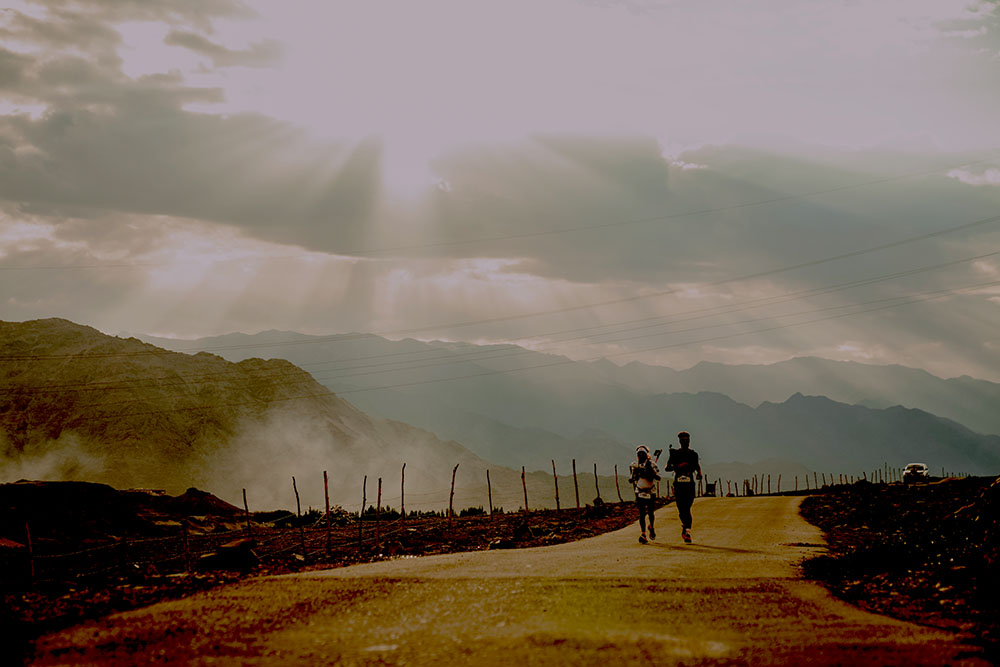
The countdown is on for one of the most extraordinary races on the One Hundred® World Championship calendar.
From 7–8 August, athletes from around the world will gather in India's Himalayan region for Ladakh Trail to Heaven, an ultra-endurance race that combines high-altitude competition with one of the most spectacular landscapes on Earth. Set largely above 3,500 metres and framed by peaks rising beyond 7,000 metres, the event offers an endurance challenge unlike any other on the championship circuit.
The course follows the Markha River from Leh to Stok through the cold desert of the Great Himalayas, tracing paths once travelled by traders along the ancient Silk Road. Remote mountain villages, Buddhist monasteries and sweeping high-altitude valleys provide the backdrop for a race where every kilometre demands resilience, careful pacing and respect for the environment.
Competitors will take on 100-mile, 100-kilometre and marathon distances, with the thin air and rugged terrain adding a unique dimension to the challenge. For many, success in Ladakh is determined as much by adapting to the altitude as by physical preparation, making it one of the most technically demanding events on the One Hundred calendar.
Ladakh also forms part of the One Hundred Gold Slam, alongside Costa Rica 200 and Grand Trail du Cro-Magnon. Athletes who complete all three races within a two-season window earn Gold Slam Finisher status and lifetime recognition in the One Hundred Hall of Legends, adding another layer of significance to an already iconic event.
As with every race in the One Hundred® World Championship, performances in Ladakh contribute valuable ranking points towards qualification for the season-ending Grand Final in Brazil, where world champions are crowned across each distance category.
With race week approaching, anticipation continues to build for another edition that promises breathtaking scenery, compelling competition and remarkable stories of endurance. In a place known as the Land of High Passes, the global trail running community is preparing to discover once again why Ladakh Trail to Heaven stands among the most unforgettable races in the sport.

Strategic partnership with Super Sports and appointment of Fadi Maayta as a Board Advisor anchor expansion across the Middle East and North Africa
One Hundred®, the international endurance trail running platform, today announced the establishment of its global operational headquarters in Dubai, anchored by a strategic partnership with Super Sports and supported by the appointment of Fadi Maayta as a Board Advisor and Senior Partner.
The Dubai headquarters will serve as the operational base for One Hundred®’s expansion across the Middle East and North Africa, with initial market development targeting the United Arab Emirates, Saudi Arabia, Oman, Jordan and Egypt. The region has been identified as one of the most strategically important growth markets for endurance sport globally, underpinned by sovereign tourism investment, destination-led event development and rapidly expanding participation.
Super Sports, founded in 1998, will serve as One Hundred®’s regional operations and logistics partner. One of the UAE’s leading sports event management companies, Super Sports delivers more than 200 events annually and manages a participant database exceeding 400,000 athletes. Its operational infrastructure and regional network provide the foundation for One Hundred®’s long-term development across MENA.
Fadi Maayta joins One Hundred® as a Board Advisor and Senior Partner as part of the regional strategy. Founder of ACT Holding, a group spanning ventures in artificial intelligence, health and wellness, and the sports economy, Maayta brings more than two decades of multinational and entrepreneurial experience across the Middle East and international markets. His mandate will focus on institutional partnerships, government engagement and strategic growth across the region.
The Dubai base will integrate mass participation events, championship racing and destination programming within the broader One Hundred World Championship network. The region is expected to play a central role in One Hundred®’s long-term Grand Final and destination hosting strategy, creating recurring economic, tourism and media value for host cities, tourism authorities and government partners.
João Andrade, Executive Chairman of One Hundred®, said the move reflects the strategic importance of the region:
“The Middle East and North Africa represent one of the most significant growth opportunities in global endurance sport today. The level of sovereign investment in tourism, active lifestyles and destination-led events creates a foundation that few regions can match. Establishing our global operational headquarters in Dubai positions us at the centre of that opportunity.”
João de Saldanha, CEO of One Hundred®, said the partnership with Super Sports enables a fundamentally different operating model:
“This partnership goes beyond event delivery. Super Sports provides the operational depth and regional integration that allows us to build a sustainable, long-term platform - one that delivers compounding value for athletes, communities, destinations and institutional partners. MENA is no longer an expansion market; it is becoming a cornerstone of our global architecture.”
Warren van der Merwe, Managing Director of Super Sports, said the partnership reflects the region’s broader ambition:
“One Hundred®’s platform is a natural complement to the UAE’s position as a global destination for sport and active lifestyles. Combining our regional infrastructure and participant network with One Hundred®’s championship platform creates meaningful opportunities for athletes, destinations and the institutional stakeholders shaping the future of sport in the region.”
Fadi Maayta, Board Advisor and Senior Partner of One Hundred® and founder of ACT Holding, said the partnership reflects a defining moment for the region:
“MENA is not catching up; it is setting the pace. Governments here are building the future of sport, tourism and community wellbeing with a level of ambition and coordination that few regions can match. One Hundred® is uniquely positioned to contribute to that momentum and doing it from a Dubai operational base is exactly the kind of long-term bet worth building.”

One Hundred® Ladakh Trail to Heaven will return from 6–8 August 2026, bringing athletes back to one of the world's most extraordinary endurance racing environments and introducing a competitive prize purse for the first time.
Set in the mountains of Ladakh, India, the event has expanded following its inaugural edition in 2025 and now offers 100 Mile, 100K and 42K distances designed to challenge athletes physically and mentally through altitude, technical terrain, river crossings and rapidly changing conditions.
The 2026 edition will feature prize money across the 100 Mile and 100K categories, awarded equally across the men’s and women’s categories. Another step in the event's evolution, this reflects its ambition to attract a stronger international field while continuing to celebrate the spirit of adventure that defines mountain trail running.
Held in the “Land of High Passes,” every category is contested almost entirely above 3,500 metres, with mountain passes exceeding 5,000 metres, making Ladakh Trail to Heaven one of the highest ultra-trail races on Earth.
For many athletes, the attraction of Ladakh extends beyond competition. It is an opportunity to run through one of the world's most remarkable mountain landscapes and experience a unique intersection of endurance, history, culture and nature.
The course follows the Markha River and centuries-old trade routes traversing remote mountain villages accessible only by mountain trail, delivering an experience unlike any other in endurance sport.
Warm daytime temperatures can quickly give way to freezing nights, while the reduced oxygen levels of the Himalayas create a test that demands patience, resilience and adaptability.
Ladakh Trail to Heaven is part of the pathway to the One Hundred World Championship Grand Final, with athletes earning valuable ranking points in pursuit of qualification.
The event is also an integral part of the One Hundred Gold Slam, a challenge recognising athletes who complete three of the most demanding ultra-endurance mountain races across contrasting environments: the heat and jungle of Costa Rica 200, the high-altitude landscapes of Ladakh, and the classic alpine terrain of Cro Trail. Athletes who complete all three within a two-season window earn Gold Slam Finisher status and lifetime recognition in the One Hundred Hall of Legends.
Entries are closing soon. To register, visit the Ladakh Trail to Heaven registration page.
|
LADAKH TRAIL TO HEAVEN 2026 ELITE PRIZE MONEY (IN USD) AWARDED EQUALLY FOR MEN’S AND WOMEN’S CATEGORIES |
||
|
PLACE |
100KM |
100 MILES |
|
1ST |
$500 |
$800 |
|
2ND |
$300 |
$500 |
|
3RD |
$200 |
$350 |
|
4TH |
$150 |
$250 |
|
5TH |
$100 |
$150 |
|
RACE RECORD BONUS |
$250 |
$350 |
|
TOTAL PRIZE PURSE: $7,200 |
||
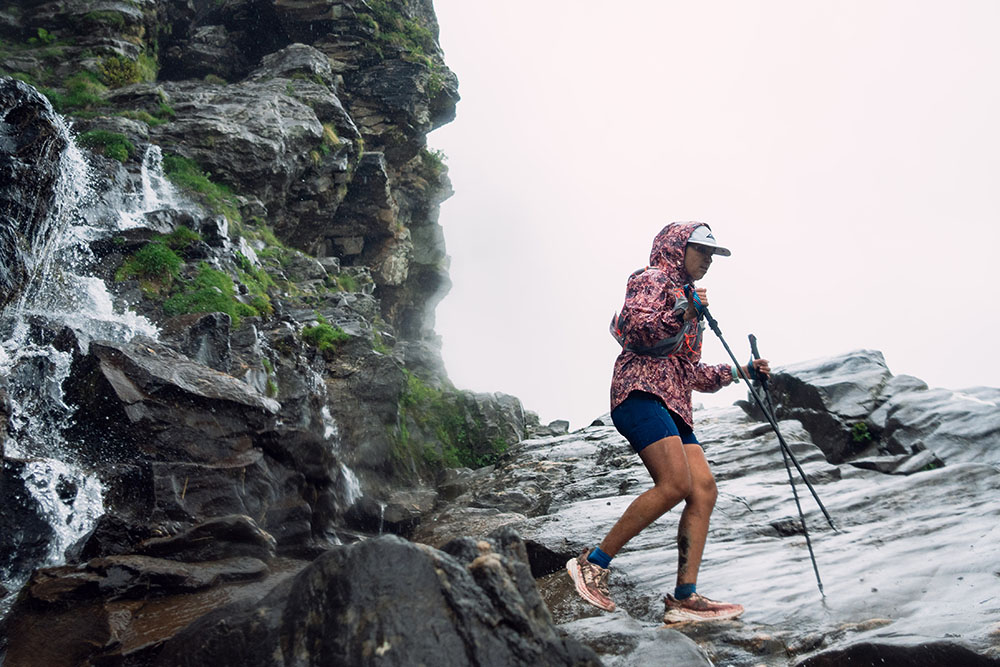
The fourth edition of Summit Run Sethan Dome challenged runners with some of the toughest weather conditions in the event's history. Persistent rain, cold temperatures, dense fog, and slippery trails greeted athletes across the 50K, 25K, and 16K races, turning the mountains above Manali into a demanding test of endurance and judgment.
Racing above 3,000 metres, the low visibility and wet terrain added another layer of complexity to the course. The conditions rewarded patience and smart decision-making as much as physical fitness, forcing competitors to adapt throughout the day.
The flagship 50K race belonged once again to the defending champions. Rahul Thakur successfully defended his men's title and Tenzing Dolma retained the women's crown. Sharang Ravindran and Jinesh Pillai completed the men's podium, while local runner Debasmita Rath finished second to Dolma.
Rather than records or personal bests, the 2026 edition became a story of resilience, adaptability, and perseverance in authentic Himalayan mountain conditions. Participation remained strong, and volunteers and aid station crews provided consistent support across the course, helping maintain a positive atmosphere from start to finish.
Summit Run Sethan Dome highlighted the type of high-altitude terrain and mountain racing culture that continues to drive trail running's growth in India. For a race currently progressing through the One Hundred Candidate Event process, the 2026 edition offered a meaningful demonstration of operational resilience. The result was an event that successfully navigated one of the most demanding weather days in its history while maintaining the mountain experience that has become its hallmark.
The Summit Run series continues with Summit Run Indrahar (3 October) and Summit Run Lurntsu Circuit (5 December), both also on the One Hundred Candidate Event pathway. View the full One Hundred Candidate Events calendar.
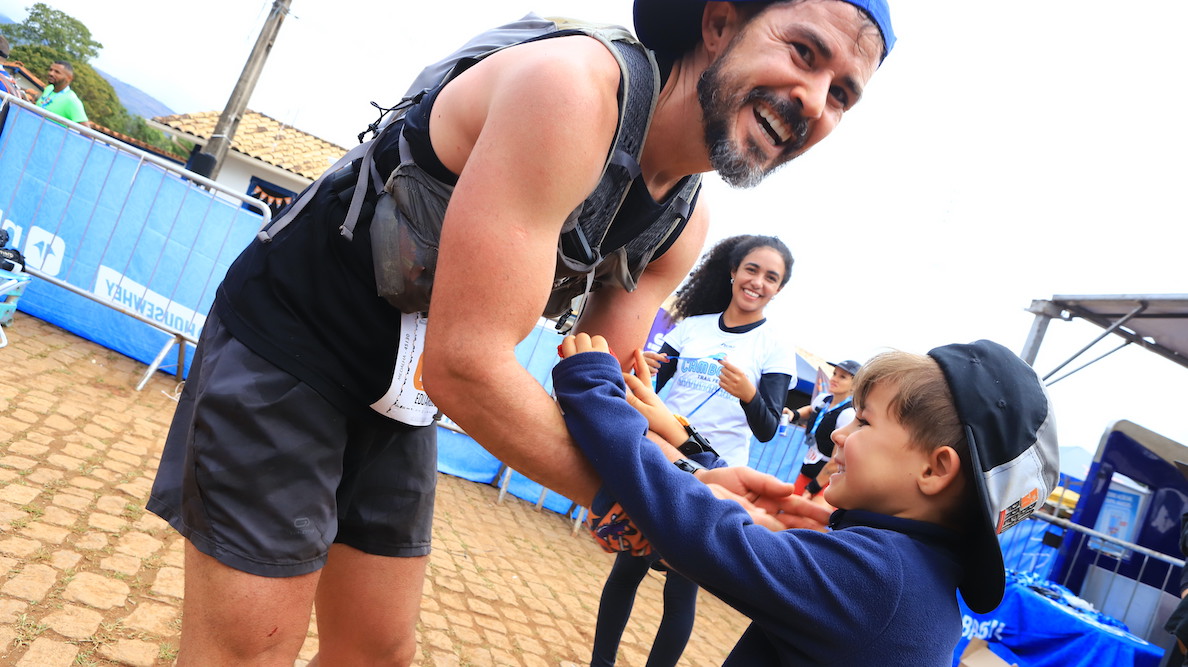
The 2026 Cambotas Trail Fest once again brought Brazil’s trail running community together for a weekend of challenging mountain racing, local pride, and shared adventure in the Serra da Cambota. From elite athletes chasing podium positions to families, children, and first-time trail runners embracing the event atmosphere, the festival showcased the unique connection between sport, nature, and the community that calls these mountains home.
Alongside some of the biggest names in Brazilian trail running battling across the rugged terrain for hard-earned podiums, athletes hailing from Barão de Cocais competed for exclusive awards highlighting the strength of local runners and celebrating the event’s deep connection with the community that hosts it.
Racing unfolded across the region’s steep climbs, forest sections and fast descents that shaped conditions for all categories. While this year the routes for the longer categories were adjusted for safety reasons, the challenge remained through significant elevation gain, technical terrain, fast descents and the rugged mountain conditions that define Cambotas Trail Fest.
The 45K race produced the most decisive winning margin of the weekend. André Luiz Mapa took the men’s victory in 5:05:00, finishing nearly 20 minutes ahead of Whanderson Assis Ramos (5:23:54) and Victor Eugênio de Resende (5:26:19). In the women’s race, Maria Aparecida da Cunha won in 6:06:23 with a similar lead ahead of Diana Bellon and Isabel Campos Coelho, who completed the podium after a closely contested finish separated by less than a second.
Despite the technical course, the 27K race featured tight winning margins from fierce competitors. Bruno Bullé Costa Esteves won the men’s race in 2:35:50 ahead of Rafael Moreira da Cruz Silva and Josemar Lazaro Ferreira. In the women’s race, Thais de Jesus Arcanjo took victory in 3:24:38, narrowly holding off Izabela Tiago Germano, while Marnie da Rocha Fortes placed third.
Beyond competition across the 6K, 11K, 17K, 27K and 45K categories, the youth and children's races brought energy, smiles and excitement, reflecting a growing passion for trail running among the next generation.
Following a weekend of competitive racing, community celebration and unforgettable mountain experiences, Cambotas Trail Fest once again demonstrated why it holds a special place on Brazil's trail running calendar, bringing together everyone who shares a genuine affinity for the mountains.
For full results across all categories, visit the event website.