
The One Hundred World Championship is pleased to announce a collaboration with race planning platform Gretel Planner, bringing advanced race-strategy technology to selected championship races and strengthening the series' commitment to athlete preparation and innovation in trail running.
Gretel Planner helps runners visualise a race before they run it. Using GPX course data and technical race information, the platform allows athletes to analyse elevation profiles, fine-tune their pacing, schedule their nutrition, and map their expected timing through checkpoints and key sections of the course.
A runner can arrive at the start line having already studied the course in detail, understanding its terrain, conditions, and demands well enough to have adapted their training, selected the right gear for the trip, and mentally mapped the challenge ahead. A race on the other side of the world can be prepared for as thoroughly as one in their own backyard.
For 2026, Gretel Planner will be integrated into several events across the championship, among them Costa Rica 200, Ladakh Trail to Heaven, Cro-Trail, and the Mons Ultra Trail Grand Final. Athletes registered for participating events will have free access to the platform as part of their race entry.
Race data for each participating event will be integrated directly into the Gretel platform, allowing registered runners to build and refine their race strategy in the weeks leading up to their event. For event organisers, the integration offers a structured way to communicate to participants all technical aspects of their race, helping them deliver a more optimised experience from registration through to race day.
By building a clear picture of what lies ahead, including organiser guidance and any course warnings – athletes can better anticipate challenging moments on the trail, make smarter decisions, and reduce the risk of costly mistakes on race day, improving overall safety.
For One Hundred, the partnership represents a further step in strengthening the athlete experience across the championship's growing ecosystem, combining the demands of world-class trail running with tools that support smarter, better-prepared racing.
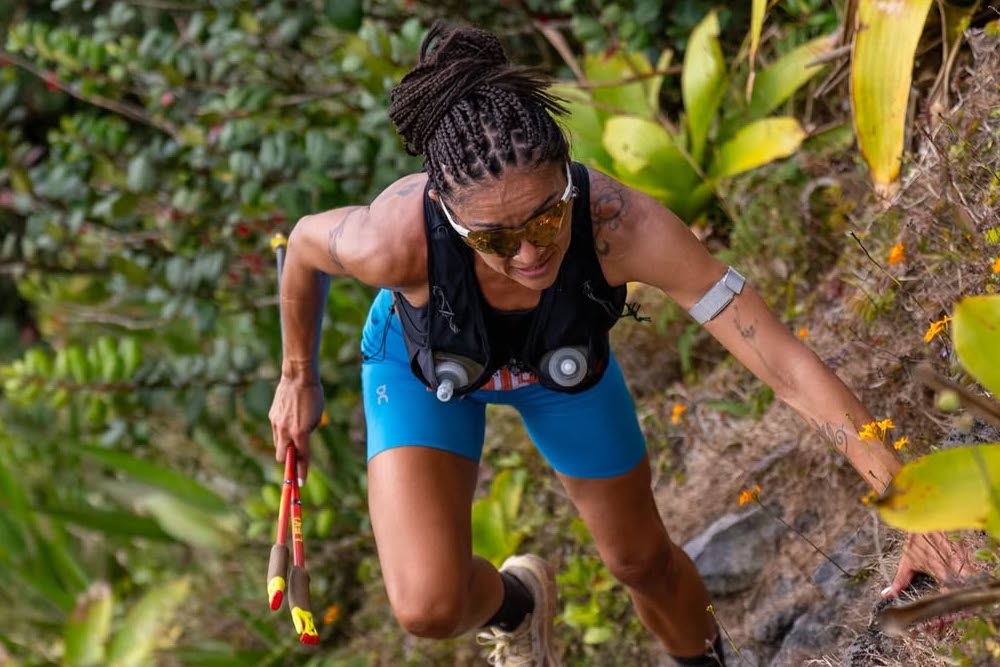
The 13th edition of the Fuego y Agua Ultramarathon delivered another unforgettable chapter on the rugged trails of Isla de Ometepe.
Since its founding in 2008, Ultra Fuego y Agua has grown into one of Central America’s longest-running and most challenging trail events, attracting runners from around the world.
This year the island delivered a dramatic welcome: Volcan Concepción erupted in the lead-up into race weekend, a powerful reminder of the forces that shape the terrain athletes must traverse.
100K: Conquering the Volcanoes
The flagship 100K is among the most demanding ultras in the region. The rugged loop includes two ascents each of Volcan Maderas and Volcan Concepción in its 20,000 feet of elevation gain, along with sandy beaches, dirt trails, paved sections, and technical jungle single-track. One of the most notorious segments is the “jungle gym,” a chaotic maze of fallen trees, disappearing trail, and deep mud that tests both navigation and endurance.
In the men’s race, Aldo Vanegas asserted control from the opening stages and never relinquished it. Setting a relentless tempo across the volcanic slopes, the Costa Rican held the lead all the way to the finish despite sustaining a gash on his knee after a fall before the halfway point. He crossed the line in 18:51:59. Nicaragua’s Jose Miguel Martinez Rojas finished second in 21:49:12, while compatriot Yuriel Alejandro Palacios completed the podium in 23:34:22.
The women’s race once again belonged to Sandra Mejía, the undisputed queen of the course. Mejía delivered a commanding performance to secure her fifth victory in the Fuego y Agua 100K, finishing in 25:44:14 and fourth overall. Only a few hours before starting in the 100K, she had already won the inaugural Vertical K challenge, adding another remarkable achievement to her legacy on the island’s volcanic trails.
Fellow One Hundred Ambassador Oliveiro Alotto rounded out the category in a brave fifth-place finish.
50K: Half the Distance, Full Challenge
The 50K follows the first half of the 100K route – but this is still a formidable challenge, featuring two ascents of Volcan Maderas along with sandy beaches, technical jungle trails, mud, and rugged terrain.
Costa Rica’s Jorge Paniagua claimed the men’s victory in 7:53:18 after a strong run through the technical sections of the course. Nicaragua’s Freddy Emmanuel Perez Lopez finished second in 8:12:33, while Valentin Fevre of France rounded out the podium in 10:25:25.
In the women’s race, it was a Nicaraguan sandwich with Ivana Valentina Garcia Castaño winning in 11:59:18. She was followed by Costa Rica’s Marcela Cabaleiro in 13:59:57, while Roxana Acevedo completed the podium in 14:31:13.
28K: The Largest Field
The 28K proved to be the most popular race of the weekend, drawing more than 100 runners to the start line. The course includes a demanding ascent and descent of Volcan Maderas, combining dirt trails, dirt roads, sandy beaches, and technical single-track.
In a close men’s race, Josias Josue Lopez Barrios (NCA) claimed victory in 4:10:46. Ashur Yousefi-Dizagetakieh Arce (CRC) finished just behind in 4:11:27, while Folker Jose Lara Pavion (NCA) secured third place in 4:31:49.
Donay Solano Quesada (CRC) won the women’s race in 5:25:49 after a strong effort on the volcanic climb. Malin Bergman (SWE) finished just seconds behind in 5:26:06, while Gloria Larios (NCA) completed the podium in 5:27:54.
14K: Short and Explosive with Big Views
The 14K race offered runners a shorter but scenic challenge. The route climbs to a viewpoint roughly one-third of the way up Volcan Maderas before returning through dirt roads, sandy sections, and single-track trails.
In an all-Nicaraguan podium, Lesber Quintero claimed the men’s victory in 1:23:16, followed by Jose Luis Gonzalez in 1:34:56 and Mario Alexander Marenco Obando in 1:35:39.
In the women’s race, Claudia Leticia Gonzales Barrantes (NCA) took the win in 2:03:18. Bertha Elena Flores Ruiz (NCA) finished second in 2:15:58, while Marie Heist (NZL) secured third place in 2:17:19.
Beyond celebrating the achievements on Ometepe’s trails, Fuego y Agua also serves as a gateway to the One Hundred Championship Grand Final. Finishers in the 14K and 28K earn points toward the Trail World Tour leaderboard, while 50K and 100K athletes climb the Endurance Trail World Championship standings - all bringing them one step closer to competing against the world’s best at the season-ending race in Mons.
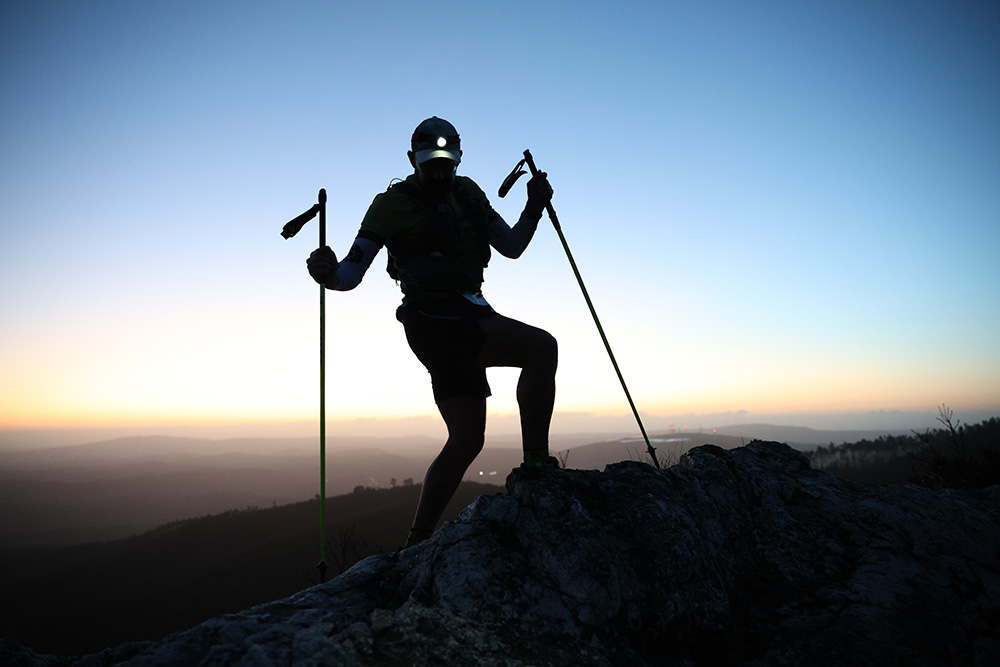
The 2026 edition of Terras do Ansião Ultra Trail (TAUT) once again turned the Stone Territories into a proving ground for endurance athletes to test their bodies, minds, and wills against the relentless terrain of the Serra de Sicó in Portugal.
With qualification pathways toward the One Hundred World Championship Grand Final on the line, performances carried significance far beyond the finish arch.
150 Miles (TAUTE XL+)
The longest distance delivered both dominance and drama. As a Special Edition distance held for the first time this year, the TAUT Endurance XL+ was the ultimate test of endurance attracting a limited field of experienced and determined ultra warriors.
Marco Pinto set the tone early and never relinquished control. The two-time 100-mile champion powered through the 150-mile course to take victory in 35:04:08, finishing over 12 hours ahead of the field. Behind him, Maarten Naaktgeboren fought hard for second place, temporarily slipping in the standings against Artur Oliveira before coming back across the latter stages of the course.
Of the seven men who started the 150-mile event, only five reached the finish line — a testament to the brutality of the terrain and the fortitude required to conquer it.
100 Miles (TAUTE XL)
Bruno Coelho de Sousa, who came third over the 200-mile category at the 2025 One Hundred World Championship Grand Final, produced a course record performance in 18:53:04 to cross the finish line five hours faster than last year’s men’s champion.
Rogério Pronto and Jean-Gabriel Gagnon took the next two steps of the podium.
In the women’s race, Sara Vaz and Andreia Vicente ran stride for stride through the opening half. Vaz then made her move, pulling ahead and eventually opening a checkpoint advantage as Vicente faded behind the 40-hour cutoff. Vaz clocked in at 27:15:34, beating the women’s course record time by nearly four hours.
100 Kilometers (TAUTE)
Eduardo Camoes broke the tape in 13:44:55. His remarkably consistent pace between checkpoints testified to his fitness, discipline, and a well-executed strategy that saw him take the lead early on. Nelson Felix and Jorge Amaral chased hard behind him to cross the finish line within an hour of the winning time.
Carla Matos was the sole female starter in the category, but the race still needed to be completed to be won. Finishing in 24:39:04, she proved her endurance on a course that gives little margin for error.
20K (TATS) and 13K (TATJ)
While the ultra distances tested limits over days, the 20-kilometer and 13-kilometer races brought intensity to the forefront as competitors tackled stone, single-track, and rugged trails.
Strong performances set the standard: Daniel Antunes and Ana Bonifácio crossed first in the 20K Terras Do Ansião Trail Sprint category, while in the 13K Terras Do Ansião Trail Jovem, Joaquim Oliveira and Sara Neves claimed victory.
These Trail World Tour races also offer athletes the chance to earn points and take their first steps on the pathway to the One Hundred® World Championship. A key pillar of the One Hundred® ecosystem, the Trail World Tour is designed to expand access across the sport and create pathways to progression on the ultra endurance journey
TAUT 2026: A Festival on the Trails, A Celebration of Endurance
TAUT weekend also delivered kids’ races and its exclusive 35K and 65K categories, providing challenge for every age and fitness level. Several shorter distances also doubled as the National Championships, showcasing the authentic spirit of Portuguese endurance culture.
From explosive short-course racing to the attritional demands of 150 miles, TAUT 2026 delivered defining performances across every category.
In the Stone Territories, nothing is given; every kilometer must be earned. This year’s champions leave Ansião not only with titles, but with valuable momentum in the race toward the One Hundred World Championship Grand Final.
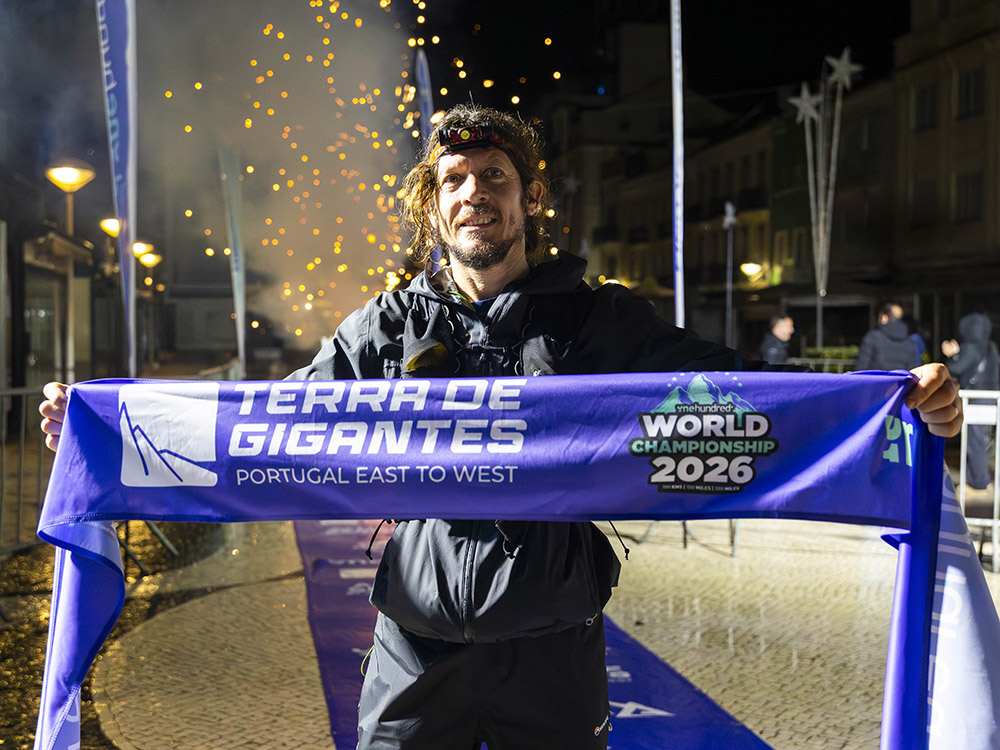
Despite a return to some of the harshest conditions in the event’s history, Terra de Gigantes 2026 delivered the fastest performances ever recorded on the course. Snow, winter winds, and brutal terrain failed to slow the champions who rewrote the record books from Portugal’s highest peaks to the Atlantic coast.
The race began in biting cold, with snowfall blanketing frozen ground and heavy clouds swallowing the mountain summits – a reminder that last year’s sunny gunstart was the exception, not the rule.
Within the opening miles, the field plunged downhill in full blizzard conditions as Britain’s Robbie Britton asserted himself early, establishing a pace matched stride for stride by compatriot Dave Phillips. Britton, the UK’s 24-hour run record holder, arrived with elite credentials and recent international podium finishes, while Phillips came into the race in formidable form following a silver medal at the Gran Canaria 360 Challenge and victory at the Essex Way Ultra 82 Miles.
In one of the largest women’s fields Terra de Gigantes has seen, Rebecca Hormann began to separate herself almost immediately. Armed with a formidable résumé of five wins across 2024 and 2025 – including dominant 100-mile victories – the Swiss contender’s pedigree showed as she not only took control of the women’s race, but surged firmly into the overall top three.
Dawn on Day 2 revealed a striking development: despite frost-laced conditions, both the men’s and women’s leaders were already further along the course than at the same point in 2025. The question was no longer about speed, but sustainability.
With Torre and Açor behind them, only one giant remained: Alto de Trevim. Rising to 1,200 metres above sea level, Trevim offers sweeping views on a clear day: the Serra da Estrela where the race began, and far in the distance, the Atlantic Ocean and the finish at Nazaré.
Through two full sunsets the competitors pressed on, finding brief refuge in small towns before re-emerging onto exposed climbs and damp roads, where winter winds tore relentlessly across the high ground. At the front, the leading trio pushed beyond exhaustion to produce something truly special.
That moment came in the wee hours of the morning, with nine-metre waves crashing just beyond the finish arch at Nazaré. As high winds swirled through the Praça Sousa Oliveira, Phillips took the tape and stopped the clock in 40:51:33. He had surged past Britton in the final 50 kilometres to claim victory – and obliterate the course record by nearly seven hours.
Britton paid the price for the ferocious tempo he had set, but regrouped to secure second place in 45:31:12. Hormann followed in 46:13:46, claiming the women’s title and an extraordinary third overall, smashing the previous women’s course record by more than nine hours.
All three had surpassed the 47:45:46 winning mark set by defending champion Dani Corvo, who was unable to continue after approximately 20 hours in this year’s race.
Carlos Abreu rounded out the men’s podium in 49:51:57, also earning a hometown triumph as the first Portuguese finisher. Among the women, Ireland’s Una Miles claimed silver in 56:59:41, while Italy’s Francesca Ferraro secured bronze in 71:45:26, arriving under the 74-hour cutoff.
With winning times incrementally falling from 49:33 in 2023 to 47:45 in 2025, 2026 marked a seismic leap forward. Records weren’t just broken; they were rewritten.
Terra de Gigantes once again delivered a finish for the ages, launching the 2026 One Hundred World Championship season and awarding the first championship points of the year as part of the Alliance Series.

The 2025 Sicoob Mons Ultra Trail will be remembered not only for its champions, but for an extraordinary achievement behind the scenes: zero serious rescue incidents across all race distances. The credit belongs to a dedicated race support crew of more than 150 people, affectionately known as the Faces of Mons, whose commitment and expertise formed the backbone of the event.
Long before the first athlete reached the start line, these crew members were already working—marking trails, setting aid stations, preparing logistics, and coordinating safety teams across the vast, technical terrain of Nova Trento. Their presence was constant: on remote ridges, deep in forest sections, at creek crossings, and in bustling aid zones where their energy lifted exhausted athletes.
Many team members were locals: students, teachers, firefighters, farmers, and lifelong trail enthusiasts. Others travelled from neighbouring regions, drawn by the reputation of the One Hundred series and the pride of supporting Brazil’s premier ultra event.
Their work went far beyond handing out water or directing traffic. They monitored athlete well-being, communicated constantly with medical staff, provided real-time GPS and environmental updates, and executed a proactive safety plan that proved flawless.
Athletes spoke repeatedly about the crew’s warmth and professionalism. Whether offering a bilingual pep talk, a perfectly timed refill, or a reassuring nod in the dark of night, the Faces of Mons created the safe and uplifting environment that allowed every athlete to push toward their limits.
The zero-rescue statistic is a testament to them: a rare, remarkable achievement in a race of this distance and difficulty.
“They are the heart of this event,” said Race Director Danilo Pinheiro. “Without them, there is no One Hundred Mons Final. They are the quiet heroes of every finish line.”
Their dedication turned a world-class race into an unforgettable community triumph.